
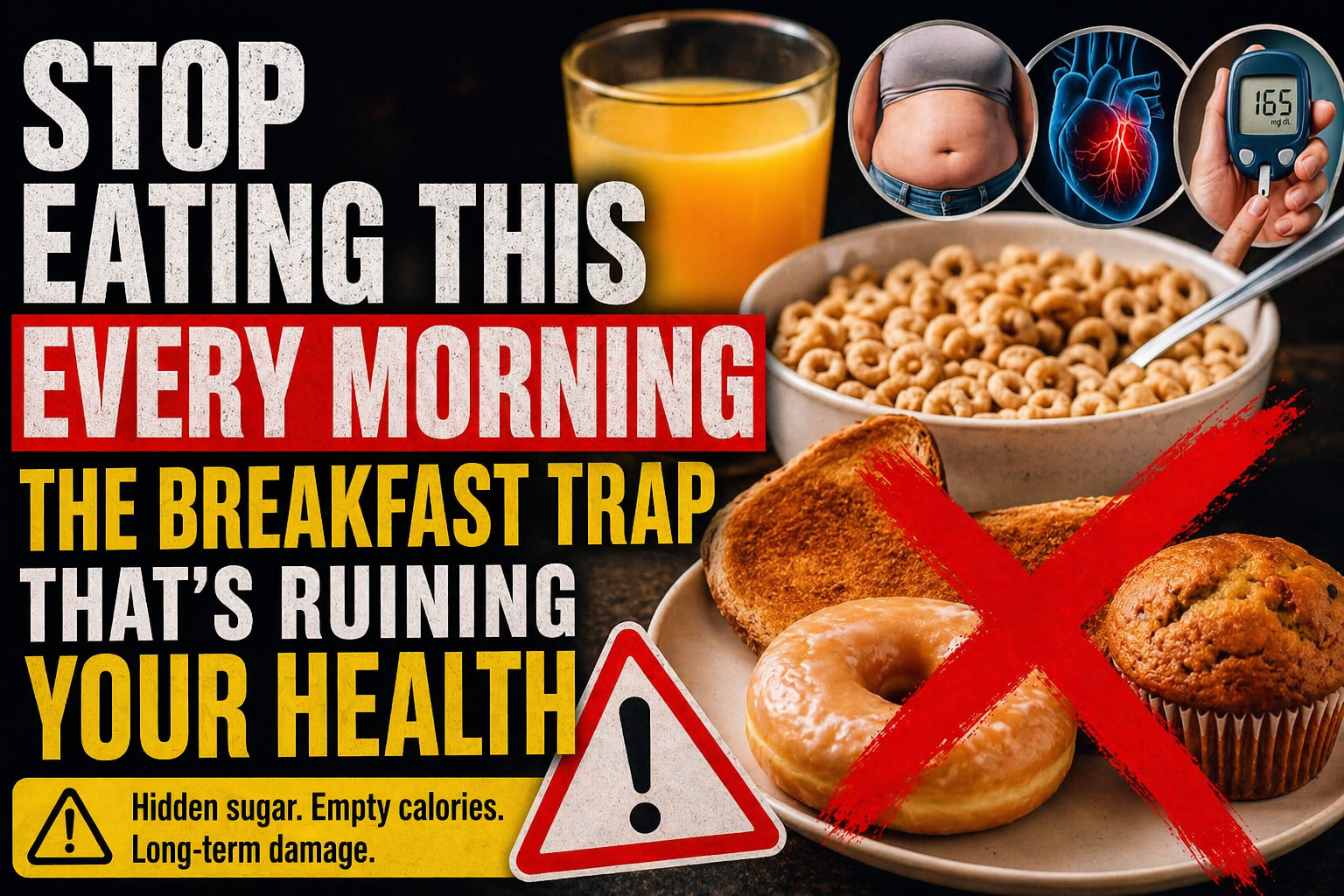
We’ve all heard that breakfast is the “most important meal of the day.” However, nutritionists and metabolic health experts are increasingly warning that what you eat for breakfast is far more important than whether you eat it at all.
For millions, the morning routine involves a quick, convenient meal that tastes great but sets the body up for a metabolic disaster that lasts until bedtime.
The Culprit: The “Sugar-Carb” Spike
The most harmful breakfast item isn’t necessarily a specific brand, but rather the category of ultra-processed, high-glycemic carbohydrates. This includes:
* Sugary cereals (even those marketed as “heart-healthy”)
* Bagels and white toast with jam
* Flavored yogurts (often packed with added sugars)
* Pastries, muffins, and breakfast bars
Why This Is Ruining Your Health
1. The Glucose Rollercoaster
When you consume a high-carb breakfast on an empty stomach, your blood glucose levels spike rapidly. Your pancreas responds by pumping out a massive dose of insulin to shuttle that sugar into your cells. Because the spike is so sharp, your blood sugar often crashes just as quickly a few hours later. This “crash” leads to brain fog, irritability, and—most importantly—intense cravings for more sugar.
2. The “Fat-Storage” Signal
When insulin levels are chronically elevated, your body’s ability to burn stored body fat is effectively “locked.” By spiking your insulin at 8:00 AM, you are essentially signaling your body to store energy rather than burn it, making weight management significantly more difficult
3. Chronic Inflammation
Many of these breakfast staples are made with refined grains and inflammatory seed oils (like soybean or canola oil). Consuming these daily keeps the body in a state of low-grade systemic inflammation, which is a precursor to heart disease, type 2 diabetes, and metabolic syndrome.
4. Gut Microbiome Disruption
Processed breakfasts are usually devoid of the fiber and phytonutrients necessary to feed a healthy gut microbiome. Instead, they can promote the growth of harmful bacteria, which can affect your mood, immunity, and energy levels.
What Should You Eat Instead?
The goal of a healthy breakfast is to stabilize blood sugar and provide satiety. Focus on these three pillars:
1. Protein: Aim for 20–30 grams. Protein takes longer to digest and is the most satiating macronutrient. Think eggs, Greek yogurt (plain), or leftovers from a protein-rich dinner.
2. Healthy Fats: Fats provide a steady stream of energy without triggering an insulin response. Think avocado, nuts, seeds, or olive oil.
3. Fiber: If you eat carbohydrates, ensure they are “slow” carbs, like berries, chia seeds, or flaxseeds, which come wrapped in fiber that slows sugar absorption.
The “Better Breakfast” Examples:
* The Savory Bowl: Two eggs cooked in butter or avocado oil with a side of sautéed spinach and half an avocado.
* The Power Smoothie: A base of unsweetened almond milk, a scoop of clean protein powder, a handful of spinach, a tablespoon of chia seeds, and a few frozen berries.
* The Quick Option: Full-fat plain Greek yogurt topped with pumpkin seeds and a small handful of walnuts.
The Bottom Line
If you want to reclaim your energy, stop the mid-morning snack cravings, and improve your metabolic health, stop treating breakfast like dessert. By prioritizing protein and healthy fats over refined sugars and grains, you can change the trajectory of your health—one meal at a time.
Leave a Reply