
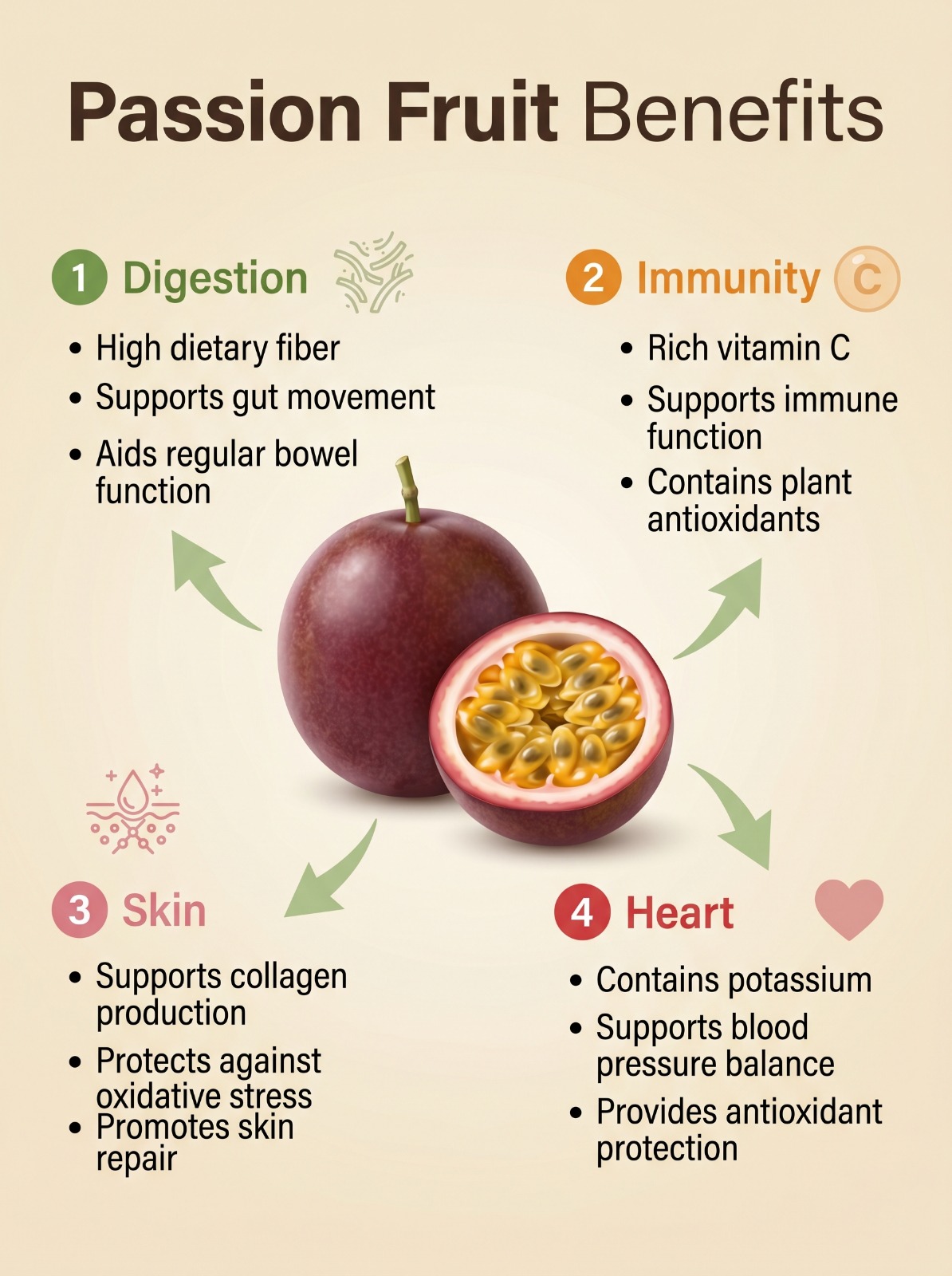
Passion fruit isn’t just tasty—it’s packed with nutrients that support several aspects of health. Here’s a clear breakdown of its main benefits:
🌿 Nutrient-Rich and Low in Calories

A single passion fruit contains vitamins A and C, dietary fiber, and beneficial plant compounds. Despite its sweet-tart flavor, it’s relatively low in calories, making it a good addition to a balanced diet.
❤️ Supports Heart Health
Passion fruit is rich in potassium, which helps regulate blood pressure by balancing sodium levels. It also contains fiber, which can help lower cholesterol and improve overall cardiovascular health.
🛡️ Boosts Immunity
Thanks to its high vitamin C content, passion fruit helps strengthen the immune system. It also contains antioxidants like beta-carotene, which protect cells from damage caused by free radicals.
🍽️ Aids Digestion
Passion fruit is an excellent source of dietary fiber, especially in its seeds. Fiber supports healthy digestion, helps prevent constipation, and promotes a balanced gut microbiome.
👁️ Promotes Eye Health
Vitamin A and antioxidants in passion fruit contribute to good vision and may reduce the risk of age-related eye issues like macular degeneration.
😌 May Help Reduce Stress
Passion fruit contains compounds like magnesium, which may help relax muscles and support a calm nervous system.
🩸 Supports Blood Sugar Control
Despite its sweetness, the fiber content slows down sugar absorption, helping prevent spikes in blood glucose levels—beneficial for people managing diabetes (in moderation).
Leave a Reply