
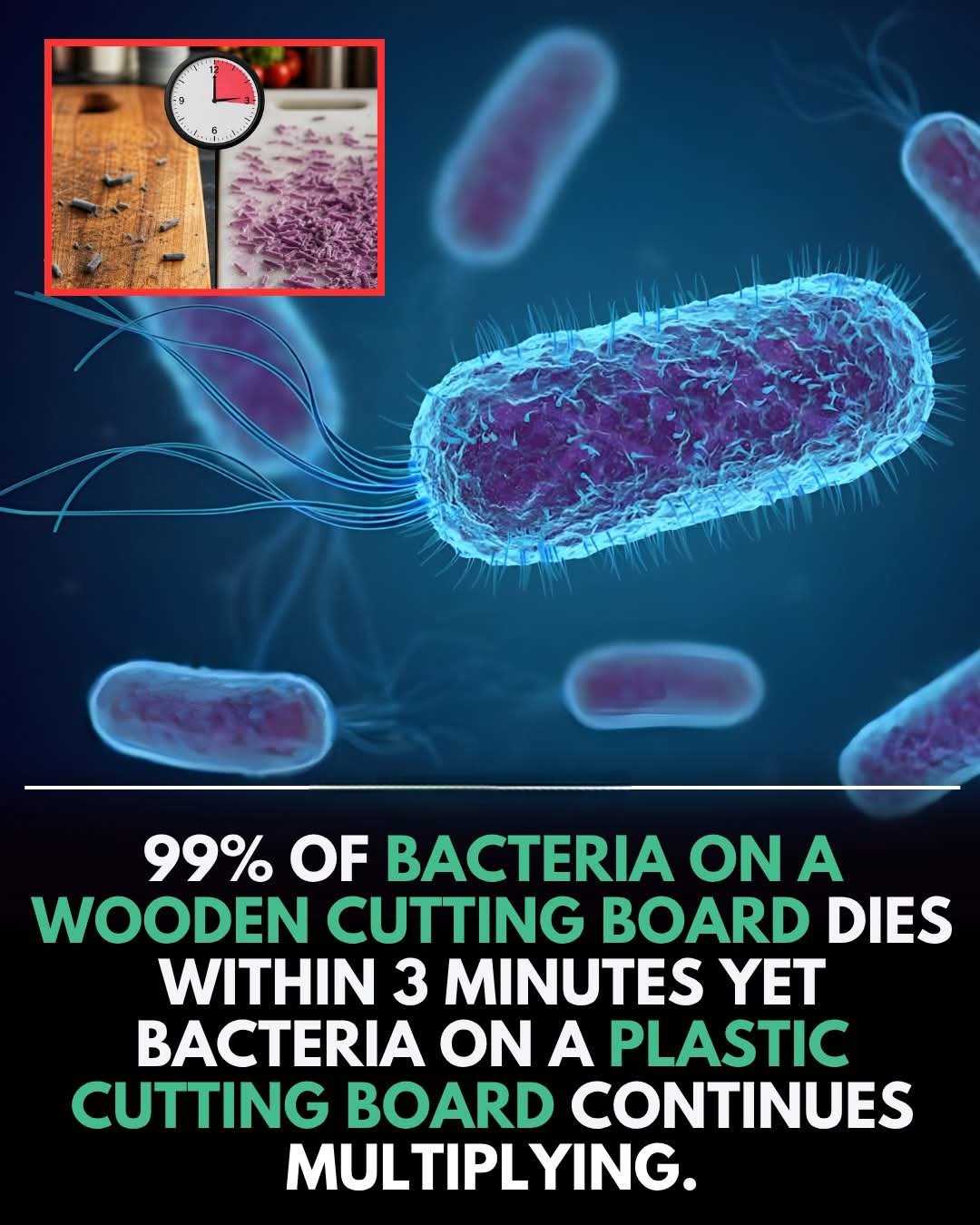
For many years, plastic cutting boards have been marketed as the more hygienic option in the kitchen. Their smooth surface, easy cleaning, and dishwasher-safe design made them the favorite choice for home cooks and restaurants alike. Meanwhile, wooden cutting boards were often viewed as old-fashioned and less sanitary because they are porous and can absorb moisture.
However, food science researchers have uncovered a fascinating biological mechanism that challenges this common belief. The natural porous structure of wood may actually make it highly effective at reducing harmful bacteria on its surface. Instead of allowing germs to remain exposed, wood can trap contaminated liquids deep within its fibers, where bacteria struggle to survive.
This surprising discovery has changed how many people think about kitchen safety and cutting board materials.
The Traditional Belief: Plastic Is Cleaner
Plastic cutting boards became popular largely because they appear easier to sanitize. Since plastic is non-porous, liquids remain on the surface rather than being absorbed. This makes washing seem more straightforward.
Many consumers assumed that because wood can absorb juices from meat, fruit, and vegetables, it would naturally harbor more bacteria. As a result, plastic boards were often considered the modern, cleaner alternative.
But appearance does not always reflect microbiological reality.
The Hidden Advantage of Wood
Wood contains countless microscopic pores and capillary channels. When contaminated liquids from raw foods touch the board, the wood quickly draws moisture inward through capillary action.
This means bacteria are pulled below the immediate cutting surface and into the internal structure of the board.
Once inside, conditions become hostile for many harmful microorganisms.
Why Bacteria Struggle Inside Wood
Bacteria need favorable conditions to remain active and multiply. Two of the most important factors are:
Moisture
Oxygen
Accessible nutrients
Suitable temperature
Inside dry wooden fibers, bacteria often lose access to these essential survival conditions.
As moisture disperses through the wood and the surface dries, microorganisms can rapidly dehydrate. This process, known as desiccation, damages bacterial cells and reduces their ability to survive.
In simple terms, the wood may trap germs in an environment where they gradually die.
How Plastic Behaves Differently
Plastic boards do not absorb liquids. Moisture, food residue, and bacteria remain on the surface unless thoroughly cleaned away.
Over time, plastic cutting boards also develop knife grooves and scratches. These tiny cuts can trap food particles and bacteria, making cleaning more difficult than many people realize.
Even though plastic looks smooth at first, repeated use can create hidden spaces where germs survive.
What Research Has Suggested
Several food safety studies have found that certain bacteria survive longer on plastic than on properly maintained wood. On wooden boards, bacterial counts often decrease more rapidly after contamination.
This does not mean wood is magical or self-cleaning. It means the natural properties of wood can work in ways that reduce bacterial survival under the right conditions.
Best Woods for Cutting Boards
Some hardwoods are especially popular because they are durable, dense, and gentle on knives:
Maple
Walnut
Beech
Cherry
Teak
Hardwoods are generally preferred because they resist deep scarring better than softwoods.
How to Keep a Wooden Cutting Board Safe
To maximize hygiene and lifespan:
1. Wash Promptly
Clean with hot water and mild soap after each use.
2. Dry Thoroughly
Allow the board to air dry upright so moisture does not remain trapped.
3. Oil Regularly
Use food-safe mineral oil to prevent cracking and excessive drying.
4. Avoid Soaking
Never leave wood submerged in water.
5. Separate Uses
Use one board for raw meats and another for produce or bread if possible.
Is Wood Better Than Plastic?
There is no one-size-fits-all answer.
Wood may offer natural antibacterial advantages, especially when properly cleaned and dried. It is durable, attractive, and often kinder to knives.
Plastic remains convenient, inexpensive, and dishwasher-safe, making it useful for some kitchens.
The safest choice depends less on the material itself and more on proper cleaning, maintenance, and food handling habits.
Final Thoughts
The idea that plastic is always more sanitary than wood is not as simple as it seems. The porous structure of natural wood can pull contaminated moisture into its fibers, where bacteria often lose the conditions they need to survive.
This fascinating kitchen science shows that traditional materials sometimes have hidden advantages modern products cannot easily replicate.
With proper care, a wooden cutting board can be both beautiful and surprisingly hygienic—making it a smart choice for many home kitchens.
Leave a Reply